Funding the Bench: How Progressive Dark Money Turned Federal Courts Into a Political Instrument
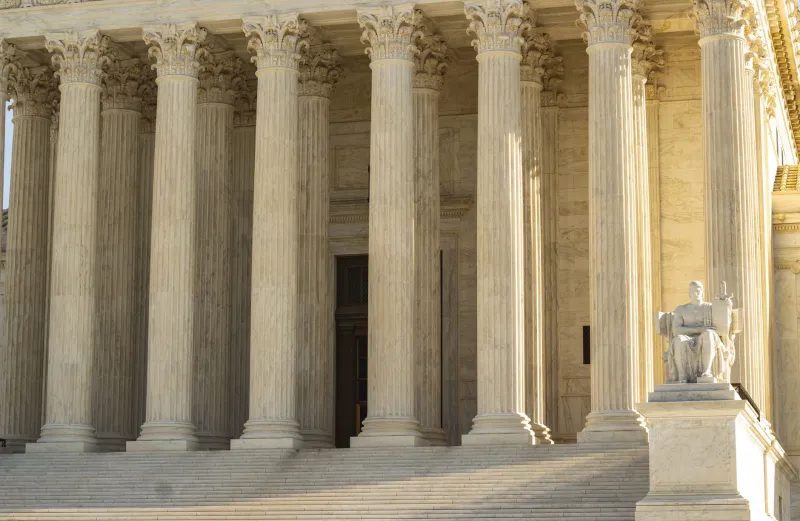
Americans are taught to think of the judiciary as the branch insulated from politics — the one arena where facts and law govern, where the financial pressures and ideological contests of the elected branches cannot reach. It is a comforting idea. It is also, increasingly, a fiction.
Behind the marble facades and solemn robes of federal courtrooms, a sophisticated and lavishly funded infrastructure has been quietly at work for decades. Its goal is not justice in the traditional sense. Its goal is outcomes — specific, predetermined, ideologically consistent outcomes on immigration, environmental regulation, voting rules, and social policy — achieved through the strategic manipulation of which cases reach which courts, argued by which advocates, and funded by which donors.
The Architecture of Coordinated Litigation
The modern progressive litigation complex did not emerge spontaneously. It was built, deliberately and expensively, from the ruins of political defeats. When conservative legislatures passed laws that progressive activists opposed, the response was not to organize voters and win elections. The response was to file lawsuits — carefully constructed lawsuits, in carefully selected jurisdictions, before carefully cultivated judges.
The organizational backbone of this enterprise includes groups such as the American Civil Liberties Union, Earthjustice, the National Immigration Law Center, and Lambda Legal, among dozens of others. These organizations are not independent actors. They are nodes in a funding network anchored by a relatively small number of extraordinarily wealthy foundations: the Ford Foundation, the Open Society Foundations, the Tides Foundation, the Sixteen Thirty Fund, and their affiliated giving vehicles.
The Open Society Foundations alone — the philanthropic apparatus of financier George Soros — has distributed billions of dollars to organizations engaged in litigation, judicial advocacy, and legal education over the past three decades. Ford Foundation grants to legal advocacy organizations have similarly totaled in the hundreds of millions. These are not charitable contributions in any meaningful sense. They are political investments with expected returns measured in court decisions.
Forum Shopping as Strategy
One of the most consequential — and least discussed — tools in this litigation arsenal is forum shopping: the practice of filing lawsuits in jurisdictions where the presiding judge is likely to be sympathetic. Because federal district courts are geographically defined, a plaintiff organization with national resources can often select its preferred judge simply by choosing where to file.
The pattern became unmistakable during the Trump administration. Challenge after challenge to executive immigration orders was filed in the Northern District of California or the District of Hawaii — jurisdictions with reliably progressive judicial temperaments. Nationwide injunctions issued by single district judges halted federal policy affecting 330 million Americans, a practice that would have been considered constitutionally aberrant a generation ago.
This is not coincidence. It is strategy, and it is funded. Organizations like the ACLU maintain sophisticated case-selection operations staffed by attorneys whose entire professional mission is identifying which legal challenges, in which venues, with which plaintiffs, offer the greatest probability of achieving desired policy outcomes. The selection process is as deliberate as any political campaign's targeting operation.
The Law School Pipeline
Funding the litigation itself is only part of the equation. Equally important — and equally funded — is shaping the pipeline of attorneys, clerks, and eventually judges who will populate the courts for generations.
Progressive foundations have invested heavily in law school fellowships, clinical programs, and public interest law centers that train attorneys in a particular ideological framework. Organizations like the American Constitution Society — explicitly founded as a progressive counterweight to the Federalist Society — receive substantial foundation support and maintain chapters at law schools across the country.
The significance of this investment compounds over time. A law student who clerks for a progressive federal judge, supported by a foundation fellowship, and mentored through an ACS network, carries that formation into every brief filed and eventually into every decision rendered if elevated to the bench. The ideology is not imposed from outside; it is cultivated from within, at the earliest stages of professional formation.
Judicial Nominations and the Confirmation Industrial Complex
The influence extends beyond the courts themselves into the confirmation process. When a president nominates a federal judge, a well-funded apparatus mobilizes immediately — researching the nominee's record, coordinating opposition messaging, funding advocacy campaigns, and pressuring senators. The Demand Justice organization, which explicitly campaigns for progressive judicial nominees and against conservative ones, has received substantial funding through the Sixteen Thirty Fund, a fiscal sponsorship vehicle that obscures the ultimate sources of contributions.
This infrastructure has no meaningful conservative equivalent at the funding scale deployed by the progressive left. The Federalist Society operates on a fraction of the resources available to the progressive judicial advocacy network and focuses primarily on legal education and intellectual exchange rather than direct political pressure campaigns.
The Constitutional Stakes
None of this would be particularly alarming if the judiciary were functioning as designed — as a body applying law rather than making it. The Founders anticipated that well-funded interests would attempt to capture legislative and executive power; they built elections and separated powers as correctives. What they did not fully anticipate was a judiciary so thoroughly integrated into a political funding network that it would become an instrument of policy transformation rather than legal interpretation.
The remedy is not simple. Judicial independence is a genuine constitutional value, and the cure of political interference in judicial decisions would be worse than the disease. But transparency is both achievable and essential. Organizations that fund litigation strategies with explicit policy goals should be required to disclose those goals and their funders in court filings. Congress has the authority to impose such requirements, and the public has every right to know who is paying for the lawsuits that reshape their lives.
The courts belong to the American people, not to the foundations that have learned to treat them as investment vehicles.