Phantom Savings and Borrowed Billions: The Art of Progressive Budget Deception
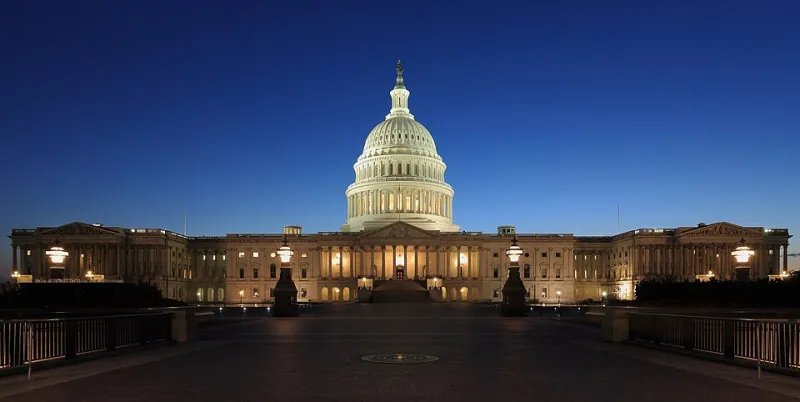
Photo: Martin Falbisoner, CC BY-SA 3.0, via Wikimedia Commons
There is a particular kind of audacity required to stand before the American people, announce a multi-trillion-dollar spending package, and declare with a straight face that it costs nothing. Yet that is precisely what progressive legislators have done, repeatedly and with increasing sophistication. The machinery of budget deception has grown so elaborate, so institutionally embedded, that most Americans never glimpse the true ledger behind the legislation. Understanding how this deception operates is not merely an academic exercise — it is a civic obligation.
The Baseline Trick: Manufacturing Savings That Never Existed
One of the most reliable tools in the progressive fiscal arsenal is the manipulation of budget baselines. In Washington, a "baseline" represents the projected level of future spending against which new proposals are measured. The trick is elegant in its dishonesty: if a program is already scheduled to grow by, say, forty percent over the next decade, a legislator can propose growing it by only thirty percent and claim to have achieved a "ten percent savings."
No actual reduction occurs. Spending continues to climb. Yet the Congressional Budget Office, working within the parameters it is given, dutifully scores the proposal as fiscally responsible. The headline writes itself: Responsible Lawmakers Cut Spending. The reality, buried beneath layers of procedural complexity, tells an entirely different story.
This baseline manipulation was on vivid display during debates over the Inflation Reduction Act, a piece of legislation whose very title constituted a form of deception. Independent economists — not conservative commentators, but credentialed analysts — noted that the act's projected deficit reduction relied heavily on assumptions that assumed certain pandemic-era programs would expire, only for Democratic leadership to simultaneously advocate for extending those very programs. The savings were, in the most literal sense, phantoms.
Sunsets and Gimmicks: Hiding the Permanent in the Temporary
Perhaps no legislative tactic is more cynically employed than the artificial sunset provision. Programs are written with expiration dates not because lawmakers intend for them to expire, but because expiring programs cost less on paper over a ten-year budget window — the standard frame used for official scoring.
The political calculus is straightforward. Write the program to expire in year four. Score it cheaply. Pass it. Then, when year four arrives, declare that allowing the program to lapse would be a "devastating cut" to vulnerable Americans. The extension passes, the true cost is finally acknowledged, and the original deception has served its purpose: the program exists, it is entrenched, and dismantling it has become politically toxic.
The Trump-era tax cuts were relentlessly attacked by progressive critics for containing sunset provisions. The attacks were not wrong on their face — sunsets do create uncertainty. But the extraordinary irony is that the same lawmakers who condemned those sunsets as reckless have spent decades perfecting the sunset as a tool of fiscal misdirection in their own spending bills. The difference, of course, is that tax cuts returning money to citizens are treated as dangerous, while spending programs that expand government dependency are treated as permanent moral commitments the moment they clear a single congressional vote.
Dynamic Scoring Fantasy: When Optimism Becomes Policy
Dynamic scoring, in principle, is a legitimate and even valuable budget tool. Unlike static scoring, which assumes economic behavior remains unchanged regardless of policy, dynamic scoring attempts to account for behavioral and macroeconomic responses to legislation. A tax cut may generate growth; a regulatory rollback may spur investment. Accounting for these effects is intellectually honest.
Progressive budget architects have, however, discovered that dynamic scoring can be weaponized. Ambitious social spending programs are increasingly accompanied by projections suggesting that the investments will pay for themselves many times over through increased workforce participation, reduced healthcare costs, or accelerated productivity growth. The numbers are presented with the full authority of economic modeling while resting on assumptions so optimistic as to be untethered from historical precedent.
When the Build Back Better framework was under consideration, proponents argued that its childcare provisions alone would generate sufficient labor force participation to offset enormous portions of the bill's cost. The models producing these projections assumed near-universal behavioral responses, ideal implementation conditions, and macroeconomic multipliers that mainstream economists viewed with considerable skepticism. The projections served their purpose regardless: they provided political cover for legislators who needed to claim fiscal responsibility while voting for historically unprecedented peacetime expenditure.
The Reconciliation Labyrinth
Budget reconciliation was designed as a mechanism for Congress to align spending and revenue with previously passed budget resolutions. It has become, in progressive hands, something altogether different: a vehicle for circumventing the Senate's sixty-vote threshold on transformational legislation by packaging that legislation as budgetary in nature.
The procedural complexity of reconciliation is itself a feature, not a bug, of this approach. Most Americans cannot be expected to track the Byrd Rule, the parliamentarian's rulings, or the distinction between mandatory and discretionary spending. Progressive strategists understand this. Legislation that would face fierce public resistance if debated transparently can be folded into reconciliation packages spanning thousands of pages, scored with favorable assumptions, and passed along party lines before opposition has fully organized.
This is not governance. It is administrative sleight of hand conducted at civilizational scale.
What Conservative Budgeting Looks Like
The contrast with conservative fiscal principles could not be more pronounced. Genuine conservative budgeting begins with a simple but demanding premise: spending must be authorized, justified, and paid for with existing or realistically projected revenue. Not with baseline manipulations. Not with sunsets designed to be ignored. Not with dynamic projections calibrated to produce a desired political outcome.
Conservative governance — at its best — insists on zero-based budgeting approaches that require programs to justify their existence each cycle rather than automatically inheriting prior-year funding plus inflation. It demands honest accounting of long-term obligations, including the unfunded liabilities in Social Security and Medicare that dwarf the annual deficits that make headlines. It treats the taxpayer not as a resource to be optimized but as a sovereign citizen whose money was earned through labor and whose consent to its expenditure is the foundation of legitimate government.
The Constitution itself reflects this disposition. The framers understood that fiscal discipline was inseparable from political liberty. A government that can spend without limit, commit future generations without accountability, and obscure the cost of its ambitions from present voters is a government that has escaped the constraints republican self-governance was designed to impose.
The Accountability the Moment Demands
American voters are not foolish. They understand, in broad terms, that Washington's books do not balance and that the national debt represents a genuine threat to national stability. What they often lack is the specific vocabulary to identify how the deception operates — which gimmicks are being deployed, which projections are implausible, which sunsets are designed to be ignored.
Closing that knowledge gap is among the most important contributions conservative commentary can make. When legislators claim their proposals cost nothing, the correct response is not polite skepticism — it is pointed, specific, documented refutation. The trillion-dollar lies do not survive scrutiny. They survive only in its absence.
The Mourdock Report will not provide that absence.