Priced Out and Talked Down: How Washington's Inflation Narrative Betrayed the American Middle Class

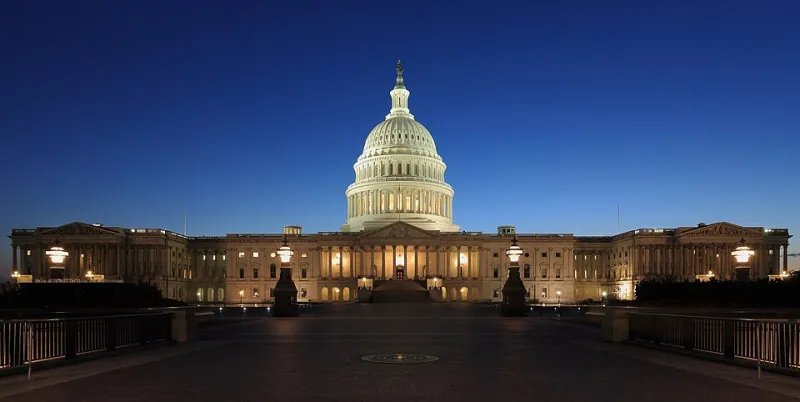
Photo: Unknown, Public domain, via Wikimedia Commons
There is a particular brand of cruelty embedded in telling a struggling person that their suffering is not real — or, worse, that it is temporary, manageable, and frankly a sign of a healthy economy. That is precisely what millions of middle-class Americans endured during the inflation surge that began in earnest in 2021 and stretched, with grinding persistence, well into subsequent years. The people responsible for managing the nation's economic policy did not merely fail to anticipate the crisis. They actively, and at times aggressively, mischaracterized it — and the American people are still paying the price.
The 'Transitory' Myth and Those Who Sold It
The word that will define the economic credibility collapse of the progressive policy era is "transitory." Federal Reserve officials, Treasury Department spokespersons, and White House economists deployed that term like a shield, deflecting legitimate concern from ordinary Americans who were watching their purchasing power erode in real time. Inflation, they insisted, was a temporary byproduct of pandemic-era supply chain disruptions. It would resolve itself. Patience was the prescription.
It was not transitory. By the time those officials quietly retired the word from their vocabulary — the Federal Reserve Chairman himself eventually conceded the term had not served the public well — inflation had already climbed to levels not witnessed since the early 1980s. The Consumer Price Index peaked above eight percent on an annualized basis in mid-2022. Grocery prices climbed faster than wages for sustained periods. Energy costs surged. Rent escalated in markets large and small alike. And through much of this, the official posture from Washington ranged from dismissive reassurance to outright irritation that Americans dared to complain.
Gaslit at the Grocery Store
Statistical indexes, however accurate their methodology, have never fully captured what it means to stand at a checkout counter and make decisions no American family should have to make. Do you buy the name-brand cereal your children prefer, or the generic that has also gone up in price? Do you fill the tank completely, or stop at half because the mortgage payment is due? These are not abstractions. They are the lived arithmetic of a policy failure that Washington's narrative machine consistently refused to acknowledge honestly.
The disconnect was stark and, for many Americans, permanently damaging to their trust in federal institutions. Administration officials celebrated low unemployment figures as evidence that the economy was fundamentally sound, while simultaneously dismissing the significance of prices that had risen twenty, thirty, even forty percent in certain essential categories since 2020. The implicit message — that Americans complaining about grocery bills were simply failing to appreciate their good fortune — struck many voters not as tone-deaf but as contemptuous.
Conservatives who raised alarms early were accused of fearmongering or, in the more politically charged framing that became fashionable in certain media circles, of rooting against the American worker. When those warnings proved accurate, no serious accountability followed. The forecasters who got it wrong retained their platforms. The critics who got it right received no apology.
Policy Choices That Poured Fuel on the Fire
Inflation of this magnitude does not emerge from a vacuum, and intellectual honesty demands a direct accounting of the policy decisions that contributed to it. The American Rescue Plan, passed in March 2021, injected approximately $1.9 trillion into an economy that was already recovering from pandemic disruption. Economists of varying political persuasions — not merely conservatives — warned at the time that the scale of that spending risked overheating an economy with constrained supply capacity. Those warnings were dismissed.
Simultaneously, the administration pursued an aggressive posture toward domestic energy production that constrained supply precisely when rising energy costs were beginning to filter through every sector of the economy. Fuel prices do not merely affect drivers at the pump. They affect the cost of shipping goods, manufacturing products, heating homes, and running the small businesses that constitute the backbone of American commercial life. Policies that restrict domestic energy output are, in effect, inflationary policies — a point this publication has made consistently and which the inflation episode confirmed with painful clarity.
The Inflation Reduction Act, passed in August 2022 with considerable fanfare, was itself a subject of considerable skepticism from independent budget analysts regarding its actual anti-inflationary impact in the near term. The name was, by the assessment of many economists, more political than descriptive. That a major piece of legislation could be branded around a crisis the administration had spent over a year minimizing was, to put it gently, a remarkable exercise in narrative management.
The Credibility Gap and Its Constitutional Dimension
This is not solely an economic story. At its core, the inflation episode raises a constitutional and civic question that conservatives have long understood to be foundational: what is the relationship between a self-governing people and the officials who claim to speak truthfully on their behalf?
The Constitution does not merely establish a framework for governance. It rests on the premise that legitimate government derives its authority from the informed consent of citizens. When officials systematically misrepresent economic conditions — whether through motivated optimism, ideological rigidity, or calculated political management — they undermine the very foundation of that consent. Americans cannot make sound civic judgments about policy when the information they receive from their government is filtered through a lens of partisan convenience.
The credibility damage inflicted during this period extends beyond any single administration or party cycle. It has deepened the already substantial skepticism that many Americans harbor toward federal economic institutions, toward the financial press that often amplified official talking points, and toward the academic economists whose models consistently lagged behind the experience of ordinary households. That skepticism, while sometimes misdirected, is not irrational. It is, in many respects, an entirely reasonable response to having been repeatedly told that one's own economic experience was either temporary or misunderstood.
What an Honest Reckoning Requires
The path forward demands more than a change in tone. It requires a genuine reassessment of the spending frameworks, energy policies, and regulatory postures that contributed to the inflationary surge — and a commitment to honest communication with the American people about the tradeoffs inherent in any major economic policy decision.
Conservatives have a responsibility here as well. The temptation to exploit economic pain purely for electoral advantage, without offering coherent alternative governance frameworks, is one that the movement must resist. Credibility is earned through consistency and candor, not merely through the accurate identification of an opponent's failures.
But accountability must begin where the failure originated. The officials, economists, and media figures who spent the better part of two years assuring Americans that their economic anxiety was overblown owe a straightforward acknowledgment that they were wrong — not merely about the data, but about the people. Middle-class Americans did not misread their grocery receipts. They did not misunderstand their utility bills. They were not, as was occasionally implied, simply too economically unsophisticated to appreciate the broader picture.
They were right. Washington was wrong. And no amount of revised messaging will restore the trust that was spent so carelessly during those years — only honest governance, beginning now, has any hope of doing that.