Red Tape Nation: How Federal Bureaucrats Crush the Entrepreneurs Who Built America

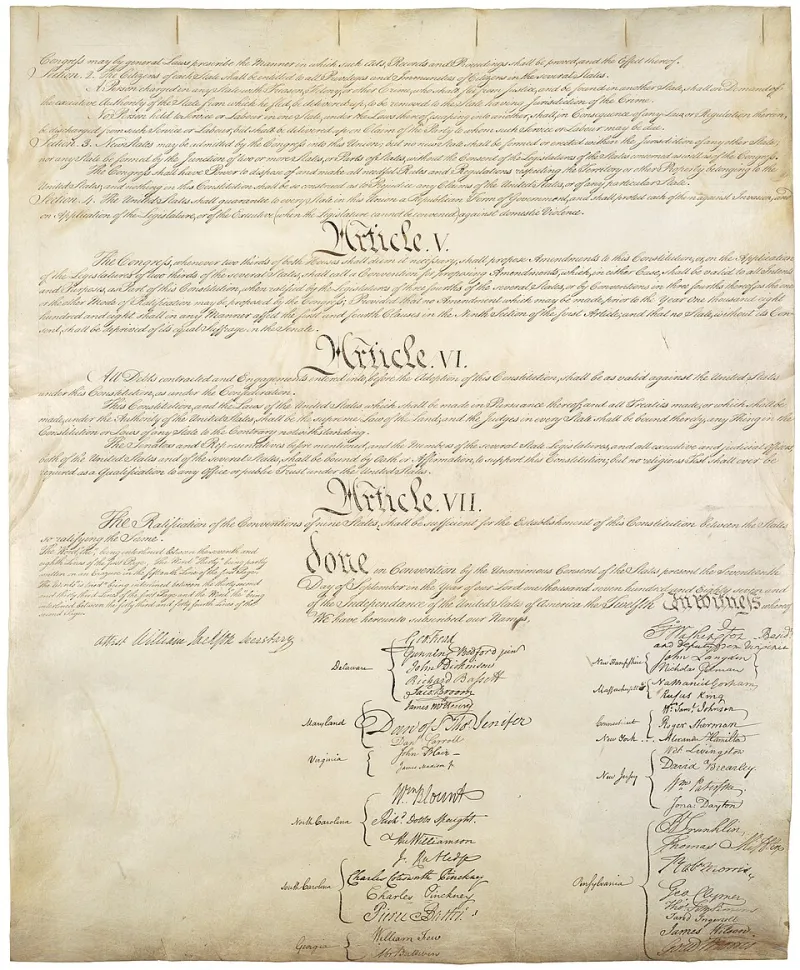
Photo: Reinhard Kirchner, CC BY-SA 3.0, via Wikimedia Commons
There is a particular kind of American story that never makes the evening news. It belongs to the hardware store owner in rural Indiana who spent three months and several thousand dollars trying to comply with a new Environmental Protection Agency reporting requirement — a requirement written by a career bureaucrat who has never signed the front of a paycheck in his life. It belongs to the food truck operator in Ohio who nearly abandoned her dream because a labyrinth of municipal, state, and federal licensing rules made launching a legitimate business feel like navigating a minefield. These are not isolated anecdotes. They are symptoms of a regulatory state that has metastasized far beyond anything the Founders envisioned or the Constitution permits.
Conservatives have long understood that economic freedom and constitutional liberty are inseparable. When Washington bureaucrats promulgate thousands of pages of new rules each year — rules carrying the full force of law yet never voted on by a single elected representative — they are not merely inconveniencing business owners. They are undermining the very architecture of self-governance that distinguishes the American republic from every other nation on earth.
The Numbers Tell a Damning Story
The Competitive Enterprise Institute's annual Ten Thousand Commandments report consistently documents a regulatory burden that staggers the imagination. The total cost of federal regulation on the American economy runs into the trillions of dollars annually. For context, that figure rivals the entire discretionary spending budget of the federal government. Every dollar consumed by compliance is a dollar that cannot be invested in a new employee, a piece of equipment, or a product that might change someone's life.
The disparity between large and small enterprises is where the injustice becomes most acute. A multinational corporation with a dedicated legal and compliance department can absorb a new regulatory mandate as a line item. It may even welcome such a mandate, knowing full well that the compliance cost functions as a barrier to entry that shields established players from upstart competitors. This phenomenon — sometimes called regulatory capture — is not a conspiracy theory. It is a well-documented reality that should outrage every conservative who believes in genuine free-market competition.
Small businesses, by contrast, face a crushing asymmetry. The National Federation of Independent Business has repeatedly found that regulatory compliance represents one of the top concerns among its members. A business with five employees cannot hire a full-time compliance officer. The owner handles it personally, often at the expense of actually running the business. Time spent deciphering federal mandates is time not spent serving customers, mentoring employees, or innovating.
The Constitutional Problem Nobody Wants to Acknowledge
At the heart of this crisis lies a constitutional deformation that conservatives must be willing to confront directly. Article I of the Constitution vests all legislative power in Congress. Not most legislative power. All of it. Yet for decades, Congress has grown comfortable delegating enormous rule-making authority to executive agencies — the EPA, the OSHA, the CFPB, the FTC, and dozens of others — with only the vaguest statutory guidance. The result is a fourth branch of government that writes laws, enforces them, and adjudicates disputes about them, all while remaining largely insulated from democratic accountability.
The Supreme Court has recently shown encouraging signs of reasserting constitutional limits on this arrangement. The West Virginia v. EPA decision in 2022 invoked the major questions doctrine, holding that agencies cannot claim sweeping authority over matters of vast economic and political significance without clear congressional authorization. This was a meaningful step. But it was one ruling against a tide of administrative expansion that has been building for nearly a century. Restoring constitutional order will require more than favorable court decisions. It will require a Congress willing to reclaim its legislative responsibilities and a president committed to reining in the administrative state rather than exploiting it.
Main Street Pays the Price for Washington's Ambitions
Consider what excessive regulation actually costs in human terms. The aspiring restaurateur who abandons his concept after discovering the permitting process will consume eighteen months and tens of thousands of dollars in fees and consulting costs. The small manufacturer in Michigan who cannot expand her facility because EPA air quality rules designed for industrial-scale operations apply equally to her twelve-person shop. The independent financial advisor in Tennessee who exits the business entirely rather than comply with a Department of Labor fiduciary rule so complex that even its authors struggled to explain it coherently.
These are not people who oppose reasonable safety standards or environmental stewardship. They are people who have been priced out of participation in the American economy by a regulatory apparatus that has lost all sense of proportion. When government makes it easier to stay home than to start a business, it is not protecting anyone. It is protecting incumbents and expanding bureaucratic empires at the expense of the dynamism that has always been America's greatest economic asset.
Concrete Solutions Rooted in Constitutional Reality
The path forward is not complicated, even if it is politically difficult. First, Congress must stop delegating. Every major regulatory action with significant economic impact should require an affirmative vote of the legislature before taking effect. The REINS Act, which has been introduced in various forms over the years, would accomplish precisely this. It deserves to become law.
Second, federal agencies should be required to conduct genuine cost-benefit analyses that account specifically for the disproportionate burden on small businesses — and those analyses should be subject to independent review, not conducted by the same agency proposing the rule.
Third, the regulatory rollback agenda that produced measurable results in recent years should be formalized through statute, not left to the discretion of each successive administration. What one executive order builds, the next can dismantle. Durable reform requires legislative action.
Finally, and perhaps most fundamentally, conservatives must make the constitutional argument loudly and without apology. This is not merely a policy debate about optimal regulatory design. It is a debate about whether the American people will continue to govern themselves through their elected representatives, or whether they will cede that authority permanently to an unaccountable administrative class in Washington.
The Choice Before Us
The men and women who open small businesses in this country are not asking for special treatment. They are asking for the opportunity to compete on a level playing field, to build something of their own, and to be judged by the marketplace rather than by a federal compliance checklist. That is a profoundly American aspiration, and it deserves a profoundly American defense.
The regulatory stranglehold on Main Street is not an accident of history. It is the predictable result of a governing philosophy that trusts bureaucratic expertise over individual liberty and congressional statute over constitutional design. Reversing it will require political will, constitutional clarity, and a willingness to say plainly what conservatives have always known: that free people, free markets, and limited government are not just policy preferences. They are the foundation upon which this republic was built.