Green Ideology vs. American Industry: The Hidden Cost of Radical Environmental Policy
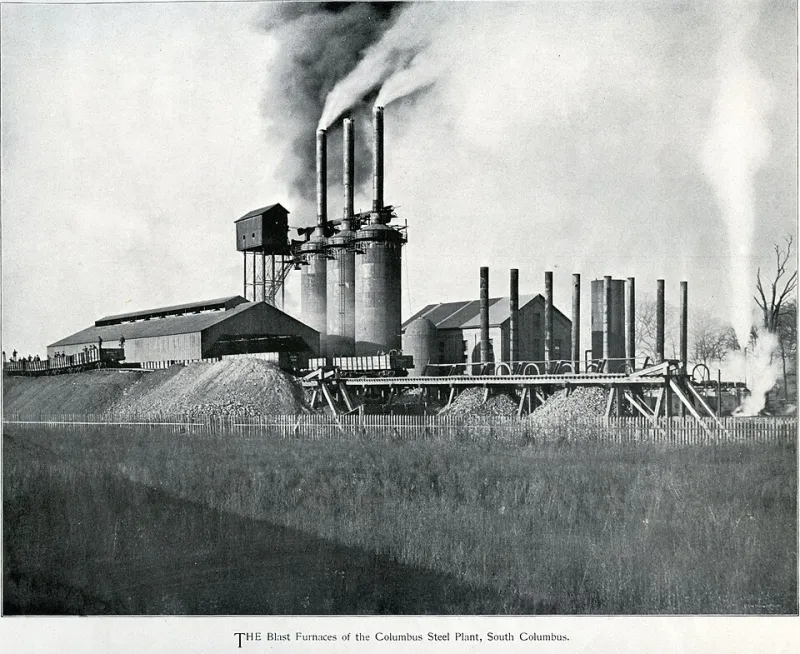
Photo: , Public domain, via Wikimedia Commons
There is a particular kind of arrogance embedded in the modern environmental regulatory apparatus — the arrogance of bureaucrats who have never met a payroll, never operated a furnace, and never watched a plant close, presuming to dictate the terms under which American workers are permitted to earn a living. Across the industrial heartland, from the steel towns of Pennsylvania to the chemical corridors of Louisiana, that arrogance has exacted a devastating toll.
The numbers tell a story that Washington's regulatory class would prefer to ignore. The United States has shed millions of manufacturing jobs over the past three decades. While economists debate the precise causes — trade policy, automation, globalization — the compounding burden of environmental regulation rarely receives the scrutiny it deserves. It should.
A Regulatory Apparatus Built to Obstruct
The Environmental Protection Agency was established in 1970 with a legitimate mandate: clean the air, protect the water, and hold genuine polluters accountable. Few Americans of good conscience would argue against those foundational goals. The problem is that what began as a reasonable framework has metastasized into something far more ambitious and far more destructive.
Today, the EPA administers thousands of regulations touching virtually every sector of American industry. The Clean Air Act alone has been expanded through successive administrations into a labyrinthine code that small and mid-sized manufacturers — the backbone of American industrial capacity — struggle to navigate even with teams of compliance attorneys. The compliance costs are not abstract. The Competitive Enterprise Institute has estimated that federal environmental regulations alone cost the American economy hundreds of billions of dollars annually. That burden falls disproportionately on manufacturers.
Consider the American steel industry. Once the envy of the industrialized world, domestic steelmakers have faced a relentless cascade of new emissions standards, permitting requirements, and enforcement actions. Each new rule, however well-intentioned in isolation, adds another layer of cost to an operation already competing against Chinese producers who face no comparable restrictions. The result is predictable: capacity closes, jobs disappear, and production migrates to nations where environmental standards are either weak or selectively enforced.
Case Studies in Regulatory Damage
The aluminum smelting industry offers one of the starkest illustrations. The United States once operated dozens of primary aluminum smelters. Today, only a handful remain operational. Energy costs — themselves heavily influenced by environmental mandates that restrict affordable power generation — account for a significant portion of the collapse. But permitting delays and emissions regulations have made it nearly impossible to site new facilities or modernize existing ones. Meanwhile, China has expanded its aluminum production capacity dramatically, unburdened by the regulatory overhead that has rendered American production economically unviable.
The cement industry tells a similar story. New source performance standards and national emission standards for hazardous air pollutants imposed by the EPA in recent years have forced the closure of kilns across the country. Each closure represents not merely a line on a balance sheet but a community — often a small town where the plant served as the primary employer — left to grapple with unemployment, population decline, and the slow erosion of civic life.
The chemical manufacturing sector has faced analogous pressures. Regulations governing volatile organic compounds, hazardous waste disposal, and stormwater management have driven numerous producers to relocate operations to Mexico, Southeast Asia, or the Middle East. The cruel irony is that production shifted to these regions frequently results in greater aggregate environmental harm globally, since foreign facilities operate under far less stringent controls. Regulatory ideology, in other words, has managed to export both jobs and pollution simultaneously.
The National Security Dimension
Conservatives have long understood that economic strength and national security are inseparable. A nation that cannot manufacture steel cannot build warships. A nation dependent on foreign aluminum cannot produce the aircraft its military requires. A chemical industry hollowed out by regulation cannot surge to produce the materials a wartime economy demands.
The COVID-19 pandemic offered a brutal tutorial in the dangers of supply chain fragility. When the nation suddenly required vast quantities of specialized industrial materials, it discovered that domestic production capacity had been systematically eroded over decades. That lesson applies with equal force to the materials and components essential to national defense. Permitting environmental ideology to further erode the industrial base is not merely an economic miscalculation — it is a strategic vulnerability.
China, it bears emphasizing, has no intention of handicapping its own industrial sector in deference to green ideology. Beijing's central planners are methodical in their ambitions. Every American plant that closes under the weight of regulatory compliance is an opportunity seized by Chinese competitors. Every manufacturing community hollowed out by regulatory overreach represents a transfer of industrial capacity to a strategic adversary. Policymakers who ignore this dynamic in favor of virtue-signaling emissions targets are not protecting the environment — they are subsidizing American decline.
A Balanced Path Forward
None of this is an argument for reckless pollution or the abandonment of legitimate environmental stewardship. Clean air and clean water are genuine public goods, and reasonable regulations enforced consistently and transparently serve an important function. The argument, rather, is for proportionality, rigor, and intellectual honesty.
Regulatory cost-benefit analyses must account fully for the human costs of industrial contraction — not merely the projected environmental benefits of a given rule. Permitting timelines must be rationalized so that a company willing to invest in domestic manufacturing is not forced to wait a decade for approvals that foreign competitors never require. And the conceit that exporting production to less regulated nations somehow benefits the global environment must be confronted directly and abandoned.
Congressional oversight of the EPA must be strengthened. The practice of regulating through guidance documents, consent decrees, and administrative reinterpretations — all designed to circumvent the legislative process — must be curtailed. When sweeping economic consequences flow from regulatory decisions, those decisions warrant democratic accountability, not bureaucratic insulation.
Reclaiming America's Industrial Identity
American manufacturing is not merely an economic category. It is a cultural inheritance — the expression of a people who built railroads across a continent, armed democracies in two world wars, and put men on the moon. The workers who operate blast furnaces and chemical reactors and aluminum smelters are not environmental villains. They are Americans doing honorable work, providing for their families, and sustaining the communities that form the sinew of this republic.
They deserve a government that treats their livelihoods with the same seriousness it accords the ideological preferences of environmental activists. They deserve regulations grounded in science rather than politics, administered with transparency rather than bureaucratic caprice, and calibrated to preserve the industrial capacity upon which both prosperity and security depend.
The regulatory guillotine has fallen too many times on too many American communities. It is past time to demand accountability — and to insist that genuine environmental protection and American industrial strength are not, in fact, incompatible goals.