Robes That Outlast Administrations: The Generational Stakes of Federal Judicial Appointments
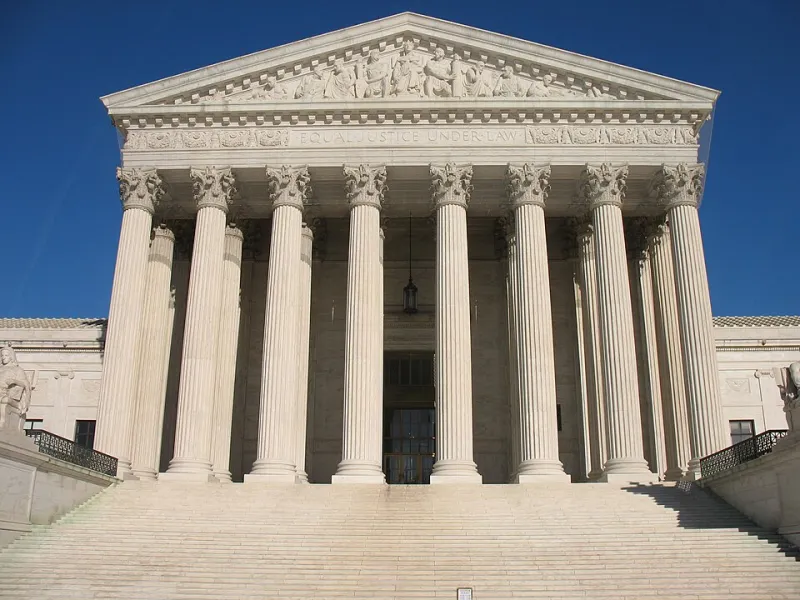
Photo: Photo by Mr. Kjetil Ree., CC BY-SA 3.0, via Wikimedia Commons
Americans tend to measure political power in election cycles. We count Senate seats, track polling averages, and debate which candidate will carry which battleground state. These are legitimate and important exercises. But there is a dimension of political power that operates on an entirely different timescale — one that most voters underestimate until they find themselves living under a ruling they never anticipated and cannot easily undo.
Federal judges, once confirmed, serve during "good behavior" — a constitutional phrase that, in practice, means they serve for life. A president who serves two full terms spends eight years in office. A federal judge appointed during those eight years may well spend thirty or forty years on the bench, issuing rulings that define the contours of religious liberty, property rights, free speech, and the separation of powers long after the appointing president has retired to write his memoirs.
This is not a minor administrative detail. It is among the most consequential facts in American constitutional governance.
The Originalist Case: Reading the Constitution as Written
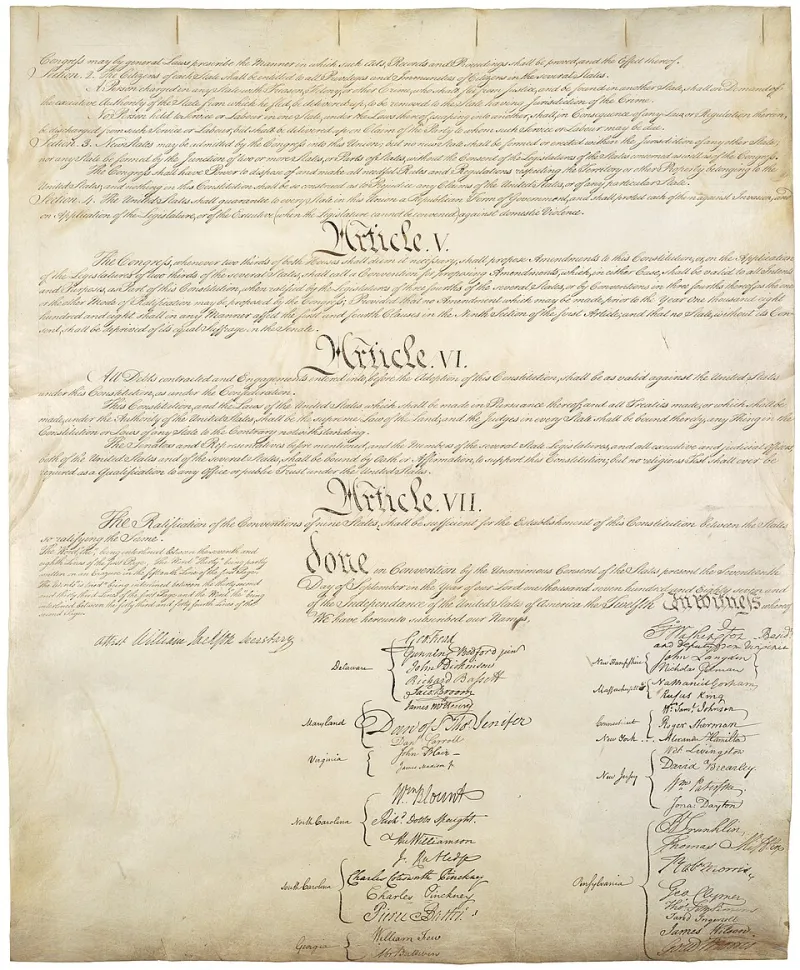
At the heart of the debate over judicial appointments lies a fundamental disagreement about what judges are actually supposed to do. The conservative position — rooted in intellectual traditions stretching from Edmund Burke to Justice Antonin Scalia — holds that judges are empowered to interpret the law as written, not to rewrite it according to their own moral preferences or social theories.
Originalism, the philosophy that the Constitution should be interpreted according to its original public meaning at the time of ratification, is not merely an academic exercise. It is a structural safeguard. When judges tether their rulings to the actual text and historical context of the Constitution, they constrain their own authority. They become referees enforcing established rules rather than players improvising new ones mid-game.
The alternative — what critics rightly call judicial activism — inverts this relationship. An activist judiciary treats the Constitution as a "living document" whose meaning evolves with the cultural preferences of an unelected legal elite. The predictable result is that constitutional protections expand or contract not according to the deliberate choices of the American people through their elected representatives, but according to the ideological inclinations of whoever happens to hold a lifetime appointment.
This is not democracy. It is oligarchy wearing a robe.
Landmark Consequences: How Activist Rulings Cascade
The practical stakes become clear when one examines how judicial philosophy translates into real-world outcomes across generations.
Consider the domain of religious liberty. The First Amendment's guarantee that Congress shall make no law "prohibiting the free exercise" of religion was understood by the Founders as a robust protection for the conscience of individual Americans. Decades of activist jurisprudence, however, steadily narrowed that protection — treating religious expression as something to be tolerated in private spaces while progressively excluding it from public life, commerce, and civic participation.
The Supreme Court's 2022 decision in Kennedy v. Bremerton School District, which upheld a football coach's right to pray on the field after games, represented a meaningful course correction. But that correction was only possible because the Court's composition had shifted toward justices committed to reading the Free Exercise Clause as it was written, rather than as progressive legal theorists wished it had been written.
Property rights tell a similarly cautionary tale. The Fifth Amendment's Takings Clause was designed to prevent government from seizing private property without just compensation. Yet the Supreme Court's 2005 ruling in Kelo v. City of New London permitted local governments to condemn private homes and transfer them to other private parties for economic development purposes — a decision that shocked constitutional scholars across the ideological spectrum and displaced families who had done nothing wrong. That ruling remains on the books. Its damage endures.
These cases illustrate a pattern: activist rulings create precedents that reshape the legal landscape for decades, and reversing them requires the alignment of a sympathetic Court majority, an appropriate case, and the political will to see the process through. That alignment is rare and hard-won.
The Senate's Solemn Responsibility
The confirmation process for federal judges is among the most important functions the United States Senate performs. The Founders understood this. They deliberately placed the confirmation power in the upper chamber — the body designed to be more deliberative, more insulated from momentary passions, and more attentive to long-term institutional health.
In recent decades, however, the confirmation process has become a spectacle that often obscures more than it reveals. Nominees are coached to reveal as little as possible. Senators grandstand for home audiences. The actual judicial philosophy of the nominee — the factor that will determine how they rule for the next thirty years — frequently receives less sustained scrutiny than their college thesis or a decades-old speech.
Conservatives should demand better. Senatorial advice and consent is not a rubber stamp, nor is it an opportunity for theatrical confrontation. It is a substantive obligation. Senators owe their constituents a genuine assessment of whether a nominee will faithfully apply the Constitution as written or will treat the bench as a platform for advancing preferred policy outcomes.
The distinction matters enormously. A judge who expands federal regulatory authority beyond its constitutional limits does not simply rule against one litigant — he provides a precedent that constrains economic freedom for years. A judge who reads the Second Amendment narrowly does not simply affect one gun owner — she shapes the legal environment in which millions of law-abiding Americans exercise a fundamental right.
Beyond the Supreme Court: The Overlooked Federal Judiciary
Public attention naturally gravitates toward Supreme Court nominations. The stakes are highest there, the confirmation battles most visible. But conservatives who focus exclusively on the nine justices in Washington are neglecting a vast and consequential battlefield.
The federal judiciary comprises hundreds of district court judges and circuit court judges whose rulings affect the daily lives of Americans in ways that rarely attract national headlines. Circuit courts, in particular, function as the effective final word on federal law for the vast majority of cases that never reach the Supreme Court. A circuit that consistently interprets regulatory statutes expansively, or that reads constitutional protections narrowly, shapes the legal environment for millions of people across multiple states.
Presidents who take judicial appointments seriously — who maintain robust lists of qualified originalist candidates for every level of the federal judiciary — build a legacy that outlasts their administrations by generations. Presidents who treat judicial appointments as an afterthought squander an opportunity that cannot be recovered.
A Long Game Worth Playing
Conservatives are sometimes tempted toward impatience. The policy victories of a single administration feel immediate and tangible. Judicial appointments, by contrast, involve a longer arc — nominees must be confirmed, must hear the right cases, must build the coalitions necessary for durable majorities.
But the long game is precisely the one worth playing. Legislative victories can be reversed by the next Congress. Executive orders can be rescinded by the next president. A federal judge committed to constitutional fidelity, however, will still be issuing rulings when today's political controversies are footnotes in history books.
The American constitutional order was designed to endure. Protecting it requires thinking in decades, not news cycles — and recognizing that the judges we confirm today will define the republic our children and grandchildren inhabit tomorrow. That is not a secondary concern. It is the central one.