Ruled by Decree: How Administrative Agencies Hijacked the Gender Debate and Stripped Parents of Their Voice
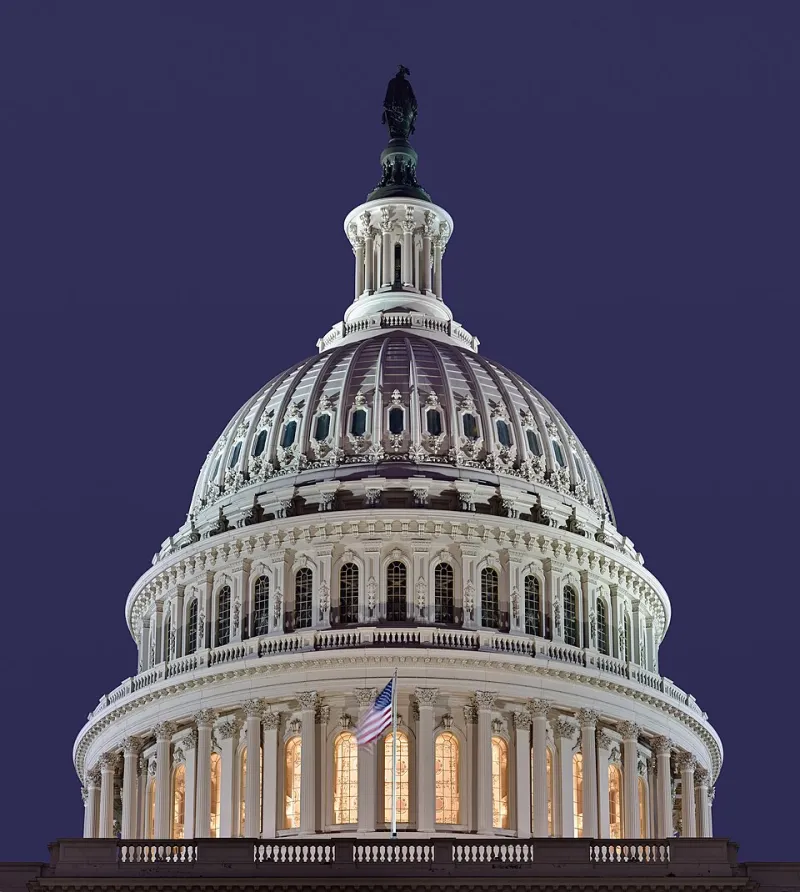
Photo: Diliff, CC BY 2.5, via Wikimedia Commons
The American constitutional order rests on a foundational premise: that the governed must consent to the laws that govern them. Elected representatives pass legislation, sign bills into law, and answer to voters when they overstep. It is an imperfect system, as all human arrangements are, but it is ours — forged through revolution, refined through civil war, and defended across generations of sacrifice.
What has unfolded over the past decade in the realm of gender policy represents something categorically different. It is governance by administrative decree — a quiet revolution conducted not in the halls of Congress but in the conference rooms of federal agencies, the policy offices of school districts, and the credentialing bodies of professional associations. No law was passed. No vote was held. No mandate was given. And yet American parents, teachers, physicians, and children now find themselves subject to an ideological framework that was never democratically ratified.
This is not hyperbole. It is a constitutional emergency dressed in bureaucratic language.
The Regulatory Architecture of Gender Ideology
The machinery by which gender ideology became federal policy is worth examining in precise detail, because its very complexity is part of the design. When change arrives through a thousand small administrative decisions rather than a single dramatic statute, it is far harder to challenge, far harder to reverse, and far harder for ordinary citizens to even perceive.
Consider the Department of Education's reinterpretation of Title IX — the 1972 statute originally enacted to protect women from sex-based discrimination in federally funded education programs. Through guidance documents, Dear Colleague letters, and regulatory rewrites, successive administrations have stretched that statute to compel schools to treat biological sex as a matter of personal declaration rather than physical reality. Schools that decline to affirm a student's chosen gender identity face the threat of losing federal funding — a coercive lever of enormous power wielded without a single congressional vote authorizing the new interpretation.
The Department of Health and Human Services has pursued a parallel track. Through its Office for Civil Rights and through Affordable Care Act regulations, it has sought to classify refusal to provide gender-transition services as unlawful sex discrimination. Physicians who exercise clinical judgment — who weigh risks, review evidence, and sometimes counsel caution — have been placed in the crosshairs of federal enforcement mechanisms. The message is unmistakable: conform to the approved ideology or face professional and legal consequences.
None of this passed through Congress. None of it was signed by a president as a deliberate act of legislation. It emerged from the discretionary interpretive authority of appointed officials who are accountable to no constituency and removable only through bureaucratic processes that most Americans cannot name, let alone navigate.
The Silencing of Dissenting Science
Perhaps the most troubling dimension of this administrative capture is what it has done to scientific discourse. The United States has long prided itself on its tradition of empirical inquiry — a culture in which evidence challenges assumption and peer review disciplines enthusiasm. That tradition is under severe strain.
Physicians, psychiatrists, and researchers who have raised legitimate clinical questions about the long-term effects of puberty blockers, cross-sex hormones, and surgical interventions on minors have found themselves subjected to professional retaliation, deplatformed from medical journals, and investigated by licensing boards. The American Academy of Pediatrics and other professional organizations have issued position statements that critics — including credentialed dissenters within those same organizations — argue reflect advocacy rather than rigorous science.
Countries including Sweden, Finland, the United Kingdom, and Denmark have conducted systematic evidence reviews and subsequently restricted or significantly curtailed pediatric gender transition interventions, citing insufficient evidence of long-term benefit and documented risks of irreversible harm. The British National Health Service's Cass Review, a landmark independent assessment published in 2024, concluded that the evidence base for youth gender medicine was remarkably weak and that ideological pressures had distorted clinical practice.
In the United States, federal health agencies have largely declined to conduct equivalent systematic reviews. The question must be asked: why? When European health systems with no conservative political agenda find the evidence wanting, what explains the American administrative state's insistence on treating the matter as settled? The answer, for anyone willing to look clearly, lies not in the science but in the politics — and in the captured institutional culture of agencies that have become extensions of ideological advocacy rather than neutral arbiters of evidence.
Parental Authority Under Assault
The constitutional stakes are sharpest where children are concerned. The Supreme Court has long recognized, in cases stretching back to Meyer v. Nebraska (1923) and Pierce v. Society of Sisters (1925), that parents possess a fundamental liberty interest in directing the upbringing and education of their children. This is not a conservative invention. It is settled constitutional doctrine.
Yet school policies across the country — many implemented through district-level administrative guidance rather than publicly debated board votes — have instructed teachers and counselors to socially transition students to alternate gender identities without notifying parents, and in some cases to actively conceal such transitions from the families involved. The implicit claim is extraordinary: that school officials possess a superior right to guide a child's most intimate sense of self, overriding the judgment and authority of the parents who bear legal and moral responsibility for that child's welfare.
This is not a marginal phenomenon. It has been documented in California, in Washington State, in Wisconsin, in Virginia, and in school districts across the country. Parents have discovered, sometimes by accident, that their children were being addressed by different names and pronouns at school while teachers were explicitly instructed not to disclose this to the family.
When parents have objected — when they have appeared at school board meetings, filed legal challenges, or simply demanded transparency — they have frequently been met with accusations of bigotry, threatened with investigations, or dismissed as obstacles to their children's wellbeing. The inversion is complete: the parent who insists on being informed becomes the threat, and the bureaucrat who withholds information becomes the protector.
Reclaiming Democratic Authority
Conservatives must resist the temptation to treat this as merely a culture war skirmish. What is at stake is something more fundamental: the question of who governs, and by what authority.
The administrative state's capacity to implement sweeping social transformations without democratic authorization is not a feature of constitutional government. It is a departure from it. The remedy is not simply to elect presidents who will issue different guidance documents — though that matters — but to pursue structural accountability through Congress, through the courts, and through the relentless assertion of parental and citizen authority at every level of government.
The Supreme Court's 2024 decision in Loper Bright Enterprises v. Raimondo, which overturned the Chevron deference doctrine, offers a significant opening. Courts are no longer obligated to defer to agency interpretations of ambiguous statutes. That means the administrative rewrites of Title IX, the HHS regulatory overreach, and the countless guidance documents that have functioned as de facto law are now subject to far more rigorous judicial scrutiny.
Conservatives should press that advantage aggressively — in the courts, in statehouses, and in Congress. Legislation clarifying the original meaning of sex in federal civil rights statutes, parental rights laws with genuine enforcement mechanisms, and structural reforms to the administrative agencies that have become ideological actors rather than neutral implementers of democratically enacted law are all within reach.
The American people did not vote for this. They were not asked. That fact alone demands a response — not merely rhetorical, but institutional and sustained. The constitutional principles at stake are too important, and the harm being done to children and families too real, for anything less.