Ballot Box Nullified: The Federal Judiciary's Quiet Campaign to Seize Control of Election Law

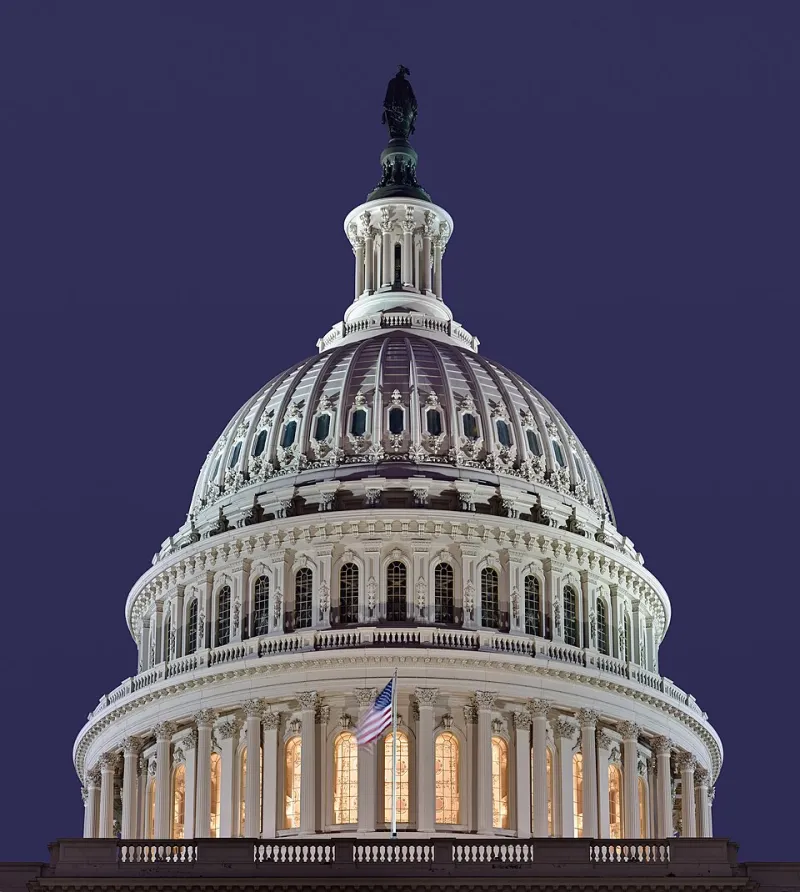
Photo: 83DegreesMedia, CC BY 2.0, via Wikimedia Commons
There is a peculiar irony embedded in the modern progressive argument about democracy. Those who speak most loudly about protecting democratic institutions have grown remarkably comfortable watching unelected, life-tenured federal judges dismantle the decisions of democratically elected state legislatures. When a judge in a single district can invalidate a voter ID law approved by millions of citizens through their chosen representatives, something has gone profoundly wrong — not with the law, but with the system that allows its erasure.
This is not a hypothetical concern. It is a documented, repeating pattern. And it demands a reckoning.
The Architecture of Judicial Supremacy
The United States Constitution assigns the regulation of federal elections primarily to the states, with Congress holding a supervisory role. Article I, Section 4 could not be clearer on this point: the times, places, and manner of holding elections shall be prescribed in each state by the legislature thereof. That language is direct. It is deliberate. The Founders understood that localized control over elections was a safeguard against consolidated power — including the consolidated power of a centralized judiciary.
Yet over the past two decades, federal courts have steadily expanded their jurisdiction over election administration in ways that would have alarmed the architects of the republic. Voter ID requirements passed by state legislatures have been enjoined. Witness signature verification rules have been suspended. Voter roll maintenance procedures have been halted. In each case, the mechanism is the same: a plaintiff files suit, a sympathetic judge issues a nationwide injunction, and the will of an entire state's electorate is placed in suspension pending years of appellate litigation.
This is not judicial review as Madison envisioned it. This is judicial governance.
Patterns That Cannot Be Dismissed as Coincidence
Consider the trajectory of voter ID legislation across the American South. Georgia, Texas, and North Carolina each passed voter integrity measures through their respective legislatures following extensive public debate and recorded votes. Each of these laws included provisions for free identification cards, multilingual assistance, and extended early voting windows — accommodations designed specifically to address accessibility concerns raised by critics.
None of that mattered. Federal courts struck down or severely limited each of these measures, relying on expansive interpretations of the Voting Rights Act that Congress itself never explicitly authorized. Courts did not merely apply the law as written; they extrapolated intent, invented standards, and substituted their own policy preferences for the considered judgment of elected officials.
The North Carolina case is particularly instructive. The Fourth Circuit Court of Appeals ruled in 2016 that the state's election law had targeted African American voters with what the court described as surgical precision. The legislature's stated rationale — election security — was dismissed as pretext. The court's reasoning required it to peer into the minds of legislators and pronounce their motivations illegitimate, a function nowhere enumerated in the Constitution and antithetical to the separation of powers.
When courts begin assigning malicious intent to duly enacted legislation based on statistical modeling and sociological theory rather than explicit evidence, they have ceased functioning as courts and begun functioning as a third legislative chamber — one that answers to no constituency and faces no electoral accountability.
The Injunction as a Political Instrument
Perhaps no development in modern federal litigation has done more damage to democratic self-governance than the proliferation of the nationwide injunction. A single district court judge — appointed by one president, confirmed by one Senate, presiding over one geographic slice of the country — can issue an order that freezes a state election law in all fifty states pending appeal.
This is not a power granted by the Constitution. It is a power that courts have arrogated to themselves over time, and Congress has largely failed to constrain it. The result is a system in which forum shopping has become a high-stakes legal strategy. Plaintiffs challenging election integrity measures know precisely which districts are most likely to produce a favorable ruling, and they file accordingly. The law itself becomes secondary to the geography of the courthouse.
The conservative legal community has raised alarms about this phenomenon for years. The Supreme Court has occasionally pushed back, most notably in its shadow docket decisions limiting lower court overreach. But the problem persists because the underlying incentive structure remains intact. Until Congress acts to limit the scope of district court injunctions in election cases — or until the Supreme Court establishes a clear and binding standard — the practice will continue.
Legislative Primacy Is Not a Radical Position
It is worth stating plainly what the restoration of legislative primacy in election administration actually means. It does not mean that courts have no role. Genuine constitutional violations — poll taxes, literacy tests, explicit racial discrimination — remain properly subject to judicial remedy. The Fifteenth Amendment and the Voting Rights Act exist for legitimate reasons, and no serious constitutional conservative disputes the core protections they provide.
What legislative primacy means is that courts must operate within the boundaries of the law as written, not the law as they wish it had been written. It means that statistical disparities alone do not constitute constitutional violations. It means that a legislature's decision to require photo identification — a requirement that exists in most functioning democracies on earth — should not be presumed discriminatory absent concrete evidence of discriminatory intent and effect.
It means, in short, that elections belong to the people and their elected representatives, not to the judiciary.
The Accountability Gap and What Fills It
Federal judges, once confirmed, face no voters. They cannot be recalled. They can be impeached, but the political will to pursue impeachment for judicial overreach has never materialized in any meaningful way. This absence of accountability is not itself a flaw — judicial independence serves important constitutional purposes. But independence was never designed to mean omnipotence.
The Founders anticipated an assertive Congress willing to check judicial excess through its authority over court jurisdiction, appellate review, and the confirmation process itself. What they did not anticipate was a Congress so paralyzed by partisan calculation that it would cede its supervisory role entirely, allowing courts to fill the vacuum with an ever-expanding conception of judicial power.
Conservatives who are serious about constitutional governance must press for concrete legislative remedies: statutory limits on nationwide injunctions, clearer standards for Voting Rights Act litigation, and a renewed commitment to confirming judges who understand that their role is to interpret law, not to author it.
The Principle at Stake
At its core, the judicial rewriting of election law is a question about who governs. The American answer to that question has always been the same: the people govern, through their chosen representatives, within the limits of the Constitution. When that answer is supplanted by the preferences of an unelected jurist operating without electoral consequence, the republic suffers a wound that no subsequent election can fully heal.
The courthouse should not be the last word on how Americans cast their ballots. The ballot box should be. Restoring that principle is not a partisan cause — it is the foundational commitment of constitutional self-government, and it is long past time to defend it without apology.